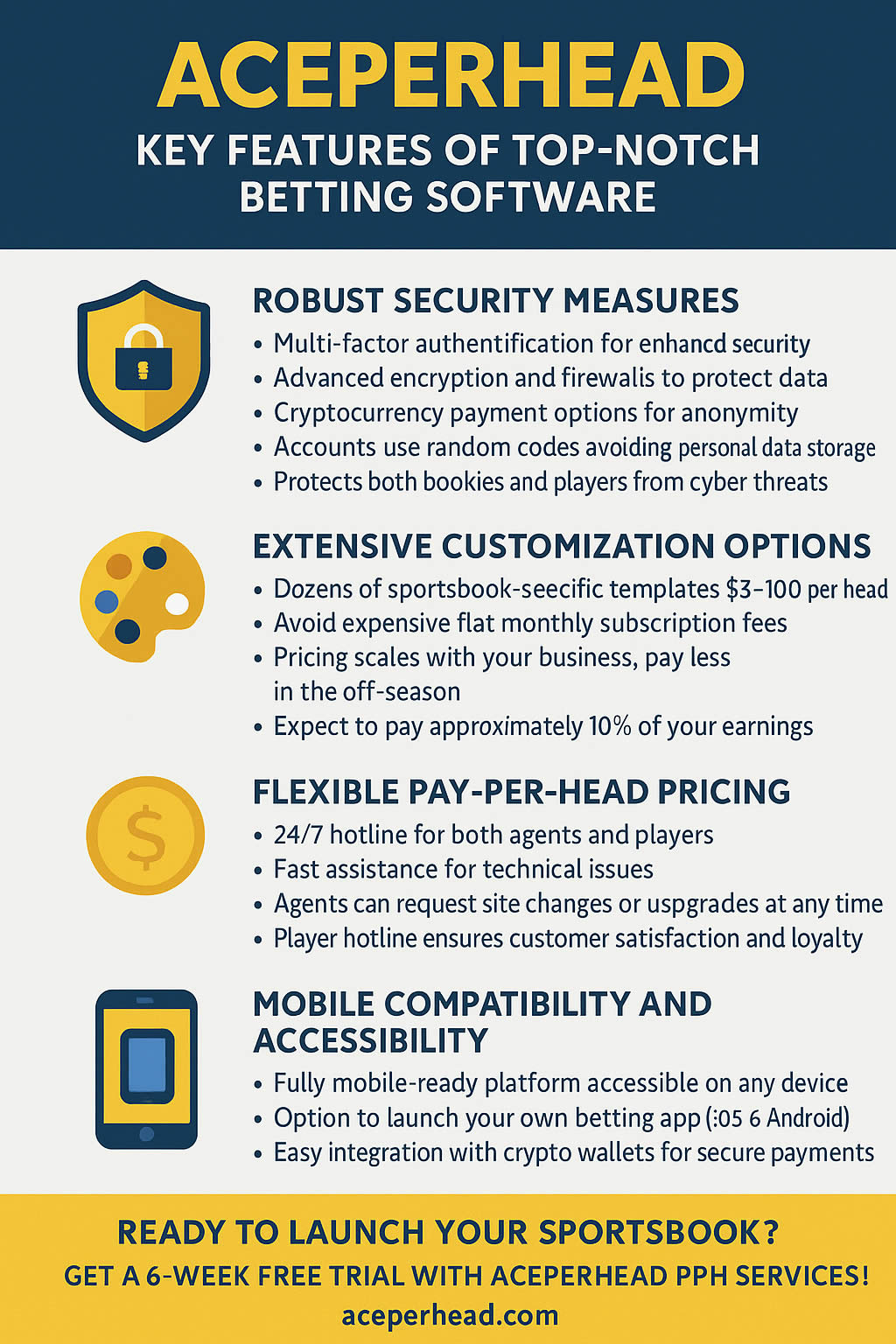
The global sports betting industry continues to expand rapidly, with legal markets now operational in 38 U.S. states and numerous international jurisdictions. However, this growth comes with increasingly complex regulatory frameworks that operators must navigate carefully.
Critical First Step: Consult with a gaming attorney licensed in your target market before establishing operations.
In today’s competitive environment, choosing the right pay per head sportsbook partner can mean the difference between sustainable success and costly missteps.
Operational Excellence:
Compliance Advantages:
Agent Support Ecosystem:
| Metric | Industry Average | AcePerHead Performance |
|---|---|---|
| Player Retention | 68% | 89% |
| Weekly Hold Percentage | 5-7% | 12-14% |
| New Player Conversion | 22% | 41% |
| Support Response Time | 47 minutes | <8 minutes |
“After 15 years in the industry, we migrated our entire operation to AcePerHead last year. The difference in player satisfaction and our bottom line has been extraordinary.“
Key Differentiators:
For a confidential consultation on establishing or upgrading your sportsbook operation:
📞 1-800-909-5193
📧 info@aceperhead.com
🌐 Schedule a Demo Here!
Running a sportsbook means juggling products, players, and paperwork. A pay per head partner does not replace your judgment about who you board or how you set figures, but it does remove the need to build grading, line feeds, and overnight coverage from scratch. That separation helps agents stay organized: you keep commercial decisions close, while the platform handles the operational layer that has to work every slate.
AcePerHead has supported agents since 1998 with that split in mind. The point is not to outsource responsibility; it is to avoid reinventing infrastructure every time regulations or player expectations shift. When your tools are steady, you have more attention for documentation, player communication, and the weekly review that keeps a book clean.
Most shops already have habits—how voids are handled, when limits change, how disputes escalate. Putting those habits in a short internal note prevents “we usually do it this way” from becoming three conflicting answers on a busy Sunday. Share the note with anyone who touches player chat so the story stays consistent.
Open the same reports every week: exposure by sport, player profitability, and open wagers that need a second look. Patterns show up early when you look on purpose. Bookie software that makes those views easy is worth more than a skin that only looks sharp in a screenshot.
Adding live markets, casino, or racebook can help revenue, but only if settlement and support keep up. Turn features on when you can explain them in one sentence to a player and reconcile them on Monday without a scavenger hunt.
When you evaluate a managed sportsbook, ask plain questions. How are grades corrected after a feed issue? Who answers when a ticket looks wrong mid-game? How do you export a clean weekly picture of the book? Ace’s packages are built so agents can answer those questions without running a second company in the background.
If you are mapping a package to your player count and product mix, use the signup flow you already have on this page or talk with the team about what you need next. Keep your own checklist: sports you offer, limits you defend, and the support channel players actually use. A legally mindful book is usually a well-run book—quiet processes, clear records, and tools that do not fight you when volume arrives.
Keep a living folder for player policies, void examples, and limit change notes. It does not need legal theater—just enough detail that two agents would handle the same situation the same way. When a dispute arrives, you want a reference, not a debate about memory.
Tie that folder to your weekly reporting ritual. If hold looks odd in one sport, annotate what you changed. Future audits of your own book go faster when the story is written down in ordinary language.
Training matters too. Anyone who answers player chat should know where the policy note lives and when to escalate. A managed sportsbook reduces technical chaos; clear internal docs reduce human chaos. Together they are what “organized operator” actually feels like on a Monday.
Finally, revisit onboarding for new players. A short welcome message that covers login help, how tickets work, and how to ask for support prevents half of the confused first-week messages. Compliance-minded books tend to be communicative books—and players notice both.
The easiest time to get sloppy is when volume is light and nothing is on fire. Resist that drift. Run the same checklist in a quiet week that you run in a loud one—lighter, maybe, but the same bones. Books that only tighten up under pressure spend their busy days repairing habits they abandoned in the off weeks.
Share ownership of standards if you work with partners. Agree on who can change limits, who talks to support, and how notes are stored. Ambiguity between agents creates the same chaos as weak software. A managed platform gives you a stable floor; your agreements with collaborators keep people from tripping on it.
When something goes well—a clean Sunday, a smooth migration, a dispute handled without drama—write what worked. Positive postmortems are rare and useful. They turn luck into a method you can repeat when the next regulatory or operational curveball arrives.